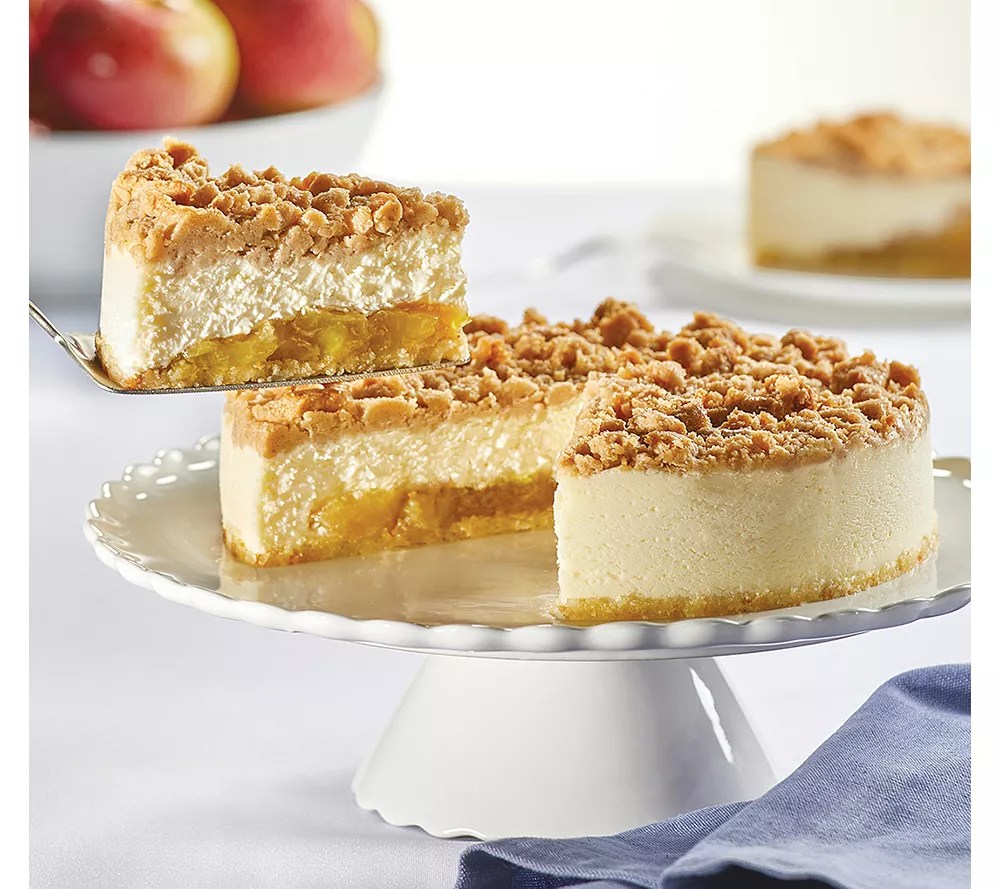
Apple Crumb Cheesecake Juniors. The beloved cheesecake ice cream recipe remains: Whisk together until smooth and combined.
Junior's 8" Apple Crumb Cheesecake from www.qvc.com Apple - Business Model, Product Portfolio, and Licensing Program
Apple is an American multinational technology company which focuses on electronic consumer products, computer software also online offerings. Its headquarters is and is located in Cupertino, California. This article will cover Apple's business strategy, product range, and licensing program. You'll also learn about how Apple utilizes patents to protect your intellectual intellectual property.
Apple's business model
Apple's business model consists of layering entertainment and entertainment services on the top of a core product. The base product is then an infrastructure for distribution of these services. The company is working to use this model to drive user growth, however, it faces numerous obstacles. One of the most prominent is a decrease in smartphone usage in major markets. The company also faces a lot of competition from a variety of different manufacturers. It is also struggling to market its iPhones in China which is the largest smartphone market around the globe. Its products are too expensive which is why the majority of consumers in China.
The year 2001 was the first time Apple made available iTunes, providing a completely new market of digital audio. For the last decade, Apple has dominated this market. iTunes is loved by customers around the world. Apple implemented copyright protections to protect the rights of record businesses, but also created an interface designed to be easy to consumers. Apple's commercial model also incorporates an initiative to increase markets that are more mainstream.
In addition to selling goods, Apple generates revenue through subscriptions to various services. Apple sells smartphones, tablets, personal computers, wearables, and other products. The company also offers subscription services for various services such as iCloud as well as iTunes.
Its product line-up
The Apple strategy to manage its product portfolio is focused on the development of new products. Although some people who love Apple have complained they don't introduce many new products, the company has a long track record of creating new product lines as well as expanding existing ones. This ensures that the business is able to manage its portfolio of products to greater success and profitability.
The company has succeeded in using its innovative product portfolio to drive significant growth in its markets. Analysts call this strategy "blue ocean" or "market-creation strategy." The Apple product line includes iMac, iPad, iPhone, App Store, and iTunes. Apple's sales are exceeding expectations, and its market capitalization has increased by 75 times over the course of 2011.
Although Apple's iPhones are generating a lot of income, it's required diversify its product offerings and discover new product categories. It's also looking to expand into new markets. The CEO has said that innovation is a key aspect of the company's culture and is expected from all employees. He also announced that the company would focus on a couple of products and do them better than the competition, and disrupt the market in an even more significant way.
Apple's product portfolio contains different products at various stages of their life cycles. With this diverse range, the company is able manage risks that could lead to revenue, or be able to thwart competitors.
Its operating system
since 1984 Apple Computer has been developing operating systems. This was the initial version, the Mac System 1.0, which was first released in conjunction with an MacIntosh personal computer. Since then Apple has been able to continuously innovate and enhance its software. Its latest releases include iOS 6 and Mac OS X Mountain Lion. At first, operating systems were text-based, but Apple engineers recognized that the next phase of computing would require bitmapping. Bitmapping is a method that allowed them the ability to alter individual pixels. This enabled users to see both text and images.
Security is a key factor when it comes to operating systems, as is the case with that of Apple's iOS is no exception. Apple's operating system software uses technology in the hardware, such as the silicon root of trust to help ensure your privacy and prevent malicious software from infiltrating your device. It also makes use secure software update procedures, which mitigates the risk of malware as well as other attacks.
The MacOS operating systems is a proprietary one and was first referred to "Mac OS X." The name macOS was the official name until Version 10.7 of the Mac OS, but Apple shifted to macOS with the release macOS High Sierra in 2016. The name of Apple's operating system is becoming simpler and more predictable.
MacOS was released in 1984 to run Mac OS on Macintosh computers. It was created as an GUI and was created to be user-friendly. It was the OS with a GUI that made it popular. Each version included basic features and added new functionality. Versions were designated from one to nine, and each version included improvements to various features.
Its licensing program
Apple's licensing program provides numerous advantages to companies who wish to create novel products to be used on the iPhone, iPad and iPod touch. These advantages include testing capabilities and world-class competitiveness. This MFi licensing program allows producers to make use of the "Made for iPhone/iPad" label to promote their products. In addition, it grants the manufacturers with the ability to connect with Apple's Developer Tech Support engineers, who help in getting their product plans accepted.
the Apple's licence program is also available for different software offerings. This includes professional applications and IT-focused software. The fee for licensing is usually equal to 10 percent of your annual purchase cost of the program. The registration fee is waived until December 13th. However, this program isn't widely available yet.
Apple's licensing program offers non-exclusive licensing rights to Covered Code. However, it does not confer patent rights. Users should ensure that they obtain other intellectual property rights to defend themselves against accusations of infringement. In addition, Apple does not automatically permit Apple Modifications. Apple is also able to extend additional licenses.
Contains milk, eggs, wheat, soy. From junior's new york desserts. Finished with homemade streusel crumb.
We Are Big Fans Of @Juniorscheesecake And This Apple Crumb Looks Amazing.
And only by a happy accident found the 2nd on my weekly costco trip. From junior's new york desserts. Junior s apple crumb cheesecake on bakespace com from www.bakespace.com.
Now This Is Crumb Cake Brooklyn Style!
I am obsessed because of the apple filling layer & crumb topping. Add in 2/3 of the. Junior's cheesecake recipe starts out by having you prepare a sponge cake crust.
Whisk Together Until Smooth And Combined.
Finished with homemade streusel crumb. The beloved cheesecake ice cream recipe remains: Contains milk, eggs, wheat, soy.
Beat In Eggs One At A Time, Mixing Until Fully Integrated.
Original new york cheesecake baked on top of a layer of tart apples and cinnamon; A thick layer of moist yellow cake and a generous layer of original new york cheesecake topped with a heaping helping of our delicious cinnamon. Track macros, calories, and more with myfitnesspal.
In The Bowl Of An Electric Mixture, Beat Cream Cheese, Sour Cream, Sugar And Vanilla Until Mixture Is Even And Smooth.
The apple crumb cheesecake is actually an original new york cheesecake but, with tart apples, cinnamon, and delicated steusel crumbs in the mix. Raspberry swirl cheesecake (3/5) apple crumb cheesecake (3/5) overcooked apples and not enough spice blueberry cheesecake (5/5) devils food cheesecake (5/5) brownie explosion. Add the cream cheese, icing sugar, cinnamon and vanilla.
Share :
Post a Comment
for "Apple Crumb Cheesecake Juniors"
Post a Comment for "Apple Crumb Cheesecake Juniors"